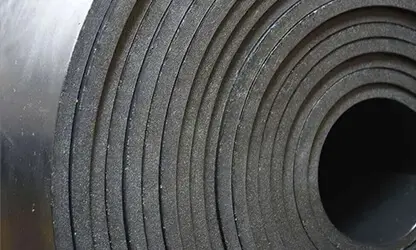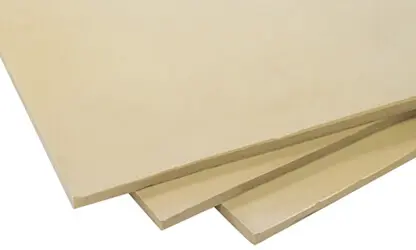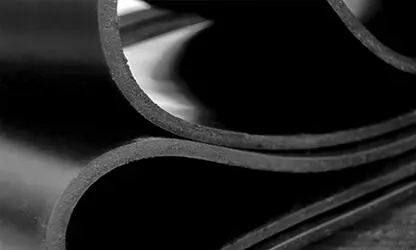
Neoprene Rubber
Neoprene rubber with excellent resistance to ozone, oils, and weather conditions. Ideal for general and outdoor applications.
Explore RubberReinforced rubber with excellent vibration absorption and chemical resistance. Fabric-reinforced structure, 60-65 Shore A hardness, and -20°C to 90°C range. Ideal for anti-vibration mounts, machine bases, and chemical environments. Get your quote today!
Need a material that absorbs vibrations and withstands chemicals in industrial environments? Reinforced Rubber (Fabric-Reinforced Neoprene) is the solution. This elastomeric material with a fabric-reinforced structure is known for its excellent vibration absorption capacity and good chemical resistance.
With a 60-65 Shore A hardness and a -20°C to 90°C temperature range, reinforced rubber is ideal for industrial applications requiring cushioning, durability, and acid and alkali resistance. Its reinforced structure provides greater tear resistance and longer service life in demanding conditions.
Available in rolls and sheets of reinforced rubber with ASTM certification. Need a vibration- and chemical-resistant material? Read on to discover all the advantages of our fabric-reinforced neoprene.
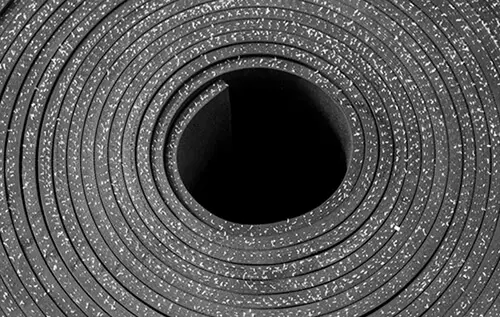
Reinforced Rubber (Fabric-Reinforced Neoprene) is characterized by its unique properties for vibration absorption and chemical resistance:
These properties make Reinforced Rubber (Fabric-Reinforced Neoprene) the ideal material for industrial applications requiring vibration damping, chemical resistance, and durability.
Technical specifications for Reinforced Rubber with excellent vibration absorption, 60-65 Shore A hardness, and acid and alkali resistance
| PARAMETERS | METHOD | SPECIFICATIONS |
|---|---|---|
| HARDNESS, SHORE A | ASTM-D2240 | 60 - 65 |
| TEMPERATURE RANGE, °C | ASTM-D573 | -20 TO 90 |
| VIBRATION ABSORPTION | - | EXCELLENT |
| SUBSTANCES | METHOD | SPECIFICATIONS |
|---|---|---|
| CHEMICAL RESISTANCE | ASTM-D471 | GOOD |
| ALCOHOL RESISTANCE | ASTM-D471 | GOOD |
| ACID & ALKALI RESISTANCE | ASTM-D471 | VERY GOOD |
Reinforced Rubber (Fabric-Reinforced Neoprene) with excellent vibration absorption and acid and alkali resistance is ideal for anti-vibration mounts, machine bases, components in chemical environments, and cushioning elements. Not recommended for mineral oils, strong solvents, or temperatures above 90°C. Consult our technical team to validate compatibility with your specific application.
Discover the sectors where Reinforced Rubber is the ideal choice for vibration absorption, cushioning, and chemical resistance
Reinforced Rubber is ideal for anti-vibration mounts, machine bases, and cushioning components in industrial equipment that generates vibrations.
Reinforced Rubber is used in washers, seals, silent blocks, and fastening elements requiring vibration absorption and durability.
Reinforced Rubber offers very good resistance to acids, alkalis, and chemicals per ASTM-D471 for components in contact with corrosive substances.
Reinforced Rubber is perfect for cushioning elements in equipment, machinery, and systems that generate vibrations and noise.
Reinforced Rubber is used in pumps, compressors, and process equipment requiring vibration isolation and protection.
Reinforced Rubber provides protective elements for sensitive equipment to vibrations and impacts, extending service life.
Reinforced Rubber (Fabric-Reinforced Neoprene) is also used in suspension systems for vibration damping, in construction equipment for anti-vibration bases, in the automotive industry for silent blocks and engine mounts, in process plants for equipment isolation, and in heavy machinery for vibration protection. Its excellent vibration absorption and acid and alkali resistance make it the preferred material for industrial applications where durability and reliability are top priorities.
Discover why Reinforced Rubber from Everest Group is the preferred choice for vibration absorption, cushioning, and chemical resistance
Reinforced Rubber protects equipment and machinery from vibrations, reducing wear and extending service life in anti-vibration mounts and machine bases.
Very good resistance to acids and alkalis per ASTM-D471, plus good resistance to chemicals and alcohols for industrial environments.
60-65 Shore A hardness that combines flexibility with adequate mechanical strength for cushioning and sealing applications.
Operates from -20°C to 90°C per ASTM-D573, covering most industrial applications and process applications.
Reinforced composition (fabric-reinforced) that provides greater durability, tear resistance, and longer service life in demanding applications.
Suitable for multiple industries and applications where cushioning, vibration absorption, and chemical resistance are required.
Reinforced Rubber (Fabric-Reinforced Neoprene) from Everest Group combines excellent vibration absorption, fabric-reinforced structure, and acid and alkali resistance to deliver superior performance in anti-vibration mounts, machine bases, components in chemical environments, and cushioning elements. ASTM certified, it guarantees safety, durability, and reliability in the most demanding applications.
Request a QuotePerformance comparison of Reinforced Rubber (Fabric-Reinforced Neoprene) against Natural Rubber and Neoprene in vibration absorption, chemical resistance, and hardness
Ideal for: Cushioning and chemical environments where maximum vibration absorption is required.
Ideal for: General flexible applications where chemical resistance and reinforced structure are not required.
Ideal for: Weather and ozone resistance with good chemical resistance and cushioning.
Why choose Reinforced Rubber? If your application requires maximum vibration absorption, fabric-reinforced structure, and acid and alkali resistance, Reinforced Rubber (Fabric-Reinforced Neoprene) is the best choice. It outperforms Natural Rubber in chemical resistance and structure, and Neoprene in vibration absorption and hardness, delivering superior performance for anti-vibration mounts, machine bases, and chemical environments. At Everest Group, we advise you on choosing the right material for your project. Contact us.
Learn about the recommended applications and limitations of Reinforced Rubber to ensure optimal performance in your project
Reinforced Rubber (Fabric-Reinforced Neoprene) is specifically designed for applications requiring excellent vibration absorption and good chemical resistance. Its fabric-reinforced structure makes it ideal for demanding industrial environments and anti-vibration mounts.
At Everest Group, our technical team is available to help you select the right material for your application with Reinforced Rubber (Fabric-Reinforced Neoprene). Contact us for a personalized consultation.
At Everest Group we have high-quality Reinforced Rubber with excellent vibration absorption, fabric-reinforced structure, and acid and alkali resistance. Specialized technical advice for anti-vibration mounts, machine bases, and chemical environments. ASTM certified. Get your quote in 24 hrs!
Have questions about Reinforced Rubber? We've compiled the most common questions and answers to help you choose the right material for your vibration absorption and chemical resistance applications.
Reinforced Rubber (Fabric-Reinforced Neoprene) is an elastomeric material with a fabric-reinforced structure that offers excellent vibration absorption and chemical resistance. It is used in anti-vibration mounts, machine bases, components in chemical environments, and cushioning elements in industrial applications where durability and vibration protection are required.
The main difference between these materials lies in their specific properties:
For applications requiring maximum vibration absorption, reinforced structure, and chemical resistance, Reinforced Rubber is the best choice.
Reinforced Rubber (Fabric-Reinforced Neoprene) has an operating temperature range of -20°C to 90°C per ASTM-D573.
For industrial applications in normal conditions, Reinforced Rubber delivers reliable performance.
Reinforced Rubber (Fabric-Reinforced Neoprene) is available in multiple forms to suit your needs:
To learn about available options and receive a personalized quote, contact us.
Yes. Everest Group's Reinforced Rubber (Fabric-Reinforced Neoprene) complies with international standards that guarantee its quality and performance:
These certifications ensure that our Reinforced Rubber meets the highest quality standards.
Yes. At Everest Group we ship Reinforced Rubber rolls, sheets, and components throughout Mexico, including:
We also export to the United States, Canada, Central America, and Spain. Contact us to learn about shipping times and costs for your location.
Neoprene rubber with excellent resistance to ozone, oils, and weather conditions. Ideal for general and outdoor applications.
Explore RubberEPDM Rubber with superior resistance to weather, ozone, and harsh environmental conditions. Ideal for roofing, gaskets, and outdoor applications.
Explore RubberNatural Amber Rubber with 500% elongation, excellent flexibility, and cushioning. Ideal for silent blocks, suspensions, and gaskets.
Explore Rubber