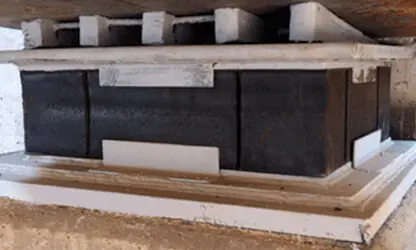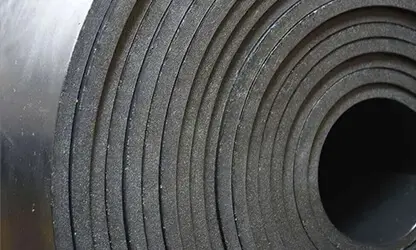
High-Spec Neoprene
High-performance neoprene for applications requiring superior mechanical properties.
Explore ProductThe neoprene rubber you need for gaskets, seals, and industrial applications. Excellent ozone, oil, and weather resistance. Versatile and durable. Get a quote in 24 hrs!
Looking for a material that resists ozone, weathering, and moderate oil exposure? Neoprene rubber is the solution you need. This synthetic chloroprene elastomer is widely used in gaskets, seals, and industrial applications for its excellent balance of mechanical properties and environmental resistance. It is the ideal material for applications requiring durability against ozone, weathering, and moderate oil exposure.
With a Shore A hardness of 60-65, neoprene offers a perfect balance between flexibility and mechanical resistance, maintaining good durability under demanding working conditions. Its ability to withstand temperatures from -20°C to 90°C makes it ideal for the construction industry, manufacturing, automotive, and general outdoor applications.
At Everest Group, we manufacture neoprene rubber in rolls and sheets with the highest quality standards. Need a versatile and durable material? Keep reading to discover all the advantages of neoprene rubber.
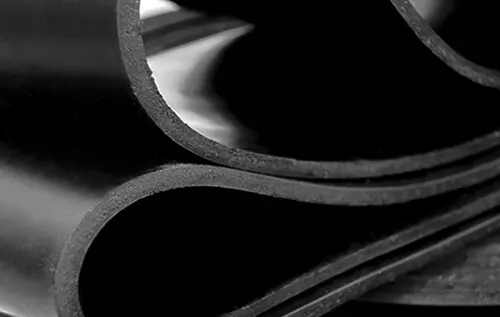
Neoprene rubber is a high-performance elastomer that stands out for its excellent environmental resistance and balance of mechanical properties. These are its main advantages:
These properties make neoprene rubber in rolls and sheets the preferred choice for industrial gaskets, expansion joints, seals, and applications in construction, manufacturing, and automotive.
Technical specifications of neoprene for industrial, construction, and outdoor applications
| Parameters | Method | Specifications |
|---|---|---|
| Shore A Hardness | ASTM-D2240 | 60 - 65 |
| Tensile Strength (psi) | ASTM-D412 | 350 psi minimum |
| % Elongation | ASTM-D412 | 375 minimum |
| Tear Resistance (KN/m) | ASTM-D624 | 16 minimum |
| Temperature Range (°C) | ASTM-D573 | -20°C to 90°C |
| Acoustic Insulation Factor | - | High |
| Vibration Absorption | - | Excellent |
| Impact Absorption | - | High |
| Substances | Method | Specifications |
|---|---|---|
| Chemical Resistance | ASTM-D471 | Good |
| Acid and Alkali Resistance | ASTM-D471 | Good |
| Alcohol Resistance | ASTM-D471 | Very Good |
| Sheet | Roll | Roll |
|---|---|---|
| 1m x 1m, in thicknesses from 1/16" to 3" | 1m x 10m, in thicknesses from 1/16" to 5/16" | 1m wide x 5m long, in thicknesses from 3/8" to 5/8" |
Note on neoprene resistance: Neoprene rubber is known for its excellent ozone and weather resistance, making it the preferred material for outdoor applications, expansion joints, and industrial gaskets. Its balance of mechanical and environmental properties makes it ideal for general applications in construction, manufacturing, and automotive. Specifications may vary depending on formulation and manufacturing process. Contact us for detailed technical support.
Discover the sectors where neoprene rubber is indispensable for its ozone resistance and versatility
Neoprene rubber is ideal for gaskets and seals in industrial equipment, hydraulic systems, and applications with moderate chemical resistance requirements. Its ozone resistance guarantees durability in demanding environments.
Neoprene is the preferred material for expansion joints, seals, and components in construction exposed to weathering, ozone, and UV radiation. Its superior environmental resistance makes it ideal for outdoor applications.
Neoprene rubber in rolls and sheets is used in machinery components with moderate oil, grease, and diverse environmental exposure. Its balanced mechanical properties make it ideal for manufacturing and automotive.
Neoprene rubber is also used in the automotive industry for hoses and seals, in construction for building joints, in the marine sector for weather protection, and in electrical equipment for insulation. Its versatility and ozone resistance make it the preferred material for general applications and outdoor use where durability and reliability are required.
Advantages that make neoprene rubber the best choice for industrial and outdoor applications
Neoprene rubber offers exceptional performance against environmental ozone and UV radiation, making it ideal for outdoor applications and expansion joints.
Operates efficiently from -20°C to 90°C, maintaining its mechanical and flexibility properties in extreme climatic conditions.
Neoprene offers good resistance to oils, greases, and hydraulic fluids, ideal for gaskets and seals in industrial environments.
Offers an ideal balance between tensile strength (350 psi minimum), elongation (375%), and tear resistance (16 KN/m), adapting to various applications.
Good performance with acids, alkalis, and common chemicals, ensuring durability in diverse industrial environments.
Excellent vibration absorption and impact resistance, ideal for reducing noise and improving comfort in industrial and construction applications.
Neoprene rubber is the trusted material for gaskets, seals, and outdoor applications where ozone resistance, weathering, and moderate oil exposure are required. Its versatility and durability guarantee superior performance in construction, manufacturing, and automotive, reducing maintenance costs and extending component service life.
Comparison of ozone, oil resistance, and other key factors
Ideal for: Gaskets, seals, outdoor applications, and construction.
Ideal for: Applications with oils, fuels, and solvents.
Ideal for: General applications without oil or ozone exposure.
Why choose Neoprene Rubber? If your application requires ozone resistance, weathering, and moderate oil exposure, neoprene rubber is the best choice. Its balance of mechanical properties and environmental durability make it the preferred material for gaskets, seals, and outdoor applications. At Everest Group, we advise you to choose the right material for your project. Contact us.
Do you have questions about neoprene rubber? At Everest Group, we have compiled the most common questions and their answers for you. Just select a question and you will see the answer immediately.
Neoprene rubber is a synthetic chloroprene elastomer widely used for its excellent balance of mechanical properties and environmental resistance. It is primarily used to manufacture gaskets, seals, and components for outdoor applications, construction, manufacturing, and automotive. Its resistance to ozone, weathering, and moderate oil exposure makes it indispensable in industrial and outdoor environments.
The main difference between neoprene and nitrile (NBR) is their ozone and oil resistance. Neoprene offers superior ozone and weather resistance, ideal for outdoor applications. Nitrile, on the other hand, has superior oil and fuel resistance but lower ozone resistance. Choose neoprene if your application requires ozone and weather resistance; choose nitrile if you need oil and fuel resistance.
Neoprene rubber is available in rolls and sheets in different thicknesses and sizes to suit each project's needs:
We also offer custom cutting for specific projects. Contact us for no-obligation technical support.
Neoprene rubber operates in a temperature range of -20°C to 90°C, maintaining its mechanical and flexibility properties in extreme conditions. This makes it suitable for outdoor, construction, manufacturing, and automotive applications where thermal variations are common.
Yes. Neoprene rubber offers good oil resistance, greases, and moderate hydraulic fluids. Although its oil resistance is lower than nitrile (NBR), it is sufficient for most industrial and construction applications where oil exposure is not extreme. For high fuel or aggressive oil exposure, nitrile is recommended.
Yes. At Everest Group, we ship neoprene rubber rolls and sheets throughout Mexico, including Guadalajara, Monterrey, Puebla, Mexico City, Querétaro, León, Tijuana, and more. We also export to the United States, Canada, Central America, and Spain. Delivery time depends on location and product availability. Contact us for shipping times and costs to your city.
At Everest Group, we have the perfect solution for you. From neoprene rubber rolls and sheets to custom gaskets and seals. Excellent ozone, oil, and weather resistance. Get a quote in 24 hrs!
High-performance neoprene for applications requiring superior mechanical properties.
Explore ProductNeoprene bearings designed to support structural loads in bridges and buildings.
Explore ProductEPDM rubber with superior weather, ozone, and severe environmental condition resistance.
Explore Product