Neoprene Bridge Bearings and Seismic Isolators
SCT and ISO 9001 certified manufacturers. Structural bearings, steel-laminated bearings and sliding (PTFE) bearings for bridges, viaducts and civil works. Load capacity up to 1000+ tons. Quote your project! Also manufacture fixed and movable bearings, articulated bearings and fixed bearings according to project requirements.
Neoprene Bridge Bearings and Structural Bearings
Neoprene bridge bearings are structural elements designed to absorb movements, rotations and loads. Manufactured with high-density neoprene, these elastomeric bearings allow thermal, seismic and live load movements, ensuring the durability and safety of structures. Also known as seismic isolators or structural bearings, they are essential in highway bridges, railway bridges and buildings.
At Grupo Everest, we manufacture fixed and movable bearings, including steel-laminated neoprene bearings and sliding (PTFE) bearings, complying with AASHTO, ASTM D4014 and EN 1337-3 standards. Our neoprene bridge bearings have a service life exceeding 50 years and require low maintenance. We manufacture products certified under SCT and ISO 9001 standards.

Technical Characteristics
Neoprene bridge bearings offer unique advantages for structural applications requiring certified safety and durability:
- High load capacity up to 1000+ tons, validated in SITC certified press
- Thermal and seismic movement absorption – ideal as seismic isolators in high-activity zones
- Weather and ozone resistance – no cracks after 100 hrs in ozone chamber
- Long service life exceeding 50 years, with low maintenance
- Easy installation and resistance to chemical agents
These bearings are essential to ensure proper structural behavior of bridges, overpasses and other civil works. Industrial capacity: 650 tons monthly of finished product.
Interactive Portal: Elastomeric Bearings
Explore our complete guide on design, engineering and application of structural bearings
Portal Content
The portal includes complete information on: structural function, bearing types, engineering and design, modeling, testing and featured projects.
For Professionals
Designed for civil engineers, structural engineers and construction professionals requiring specialized technical information.
Recommended for: Civil engineers, structural designers, project planners and students
Shear Modulus (Modulus G) in Neoprene Elastomeric Bearings
Technical validation with press certified by SITC Technical Services
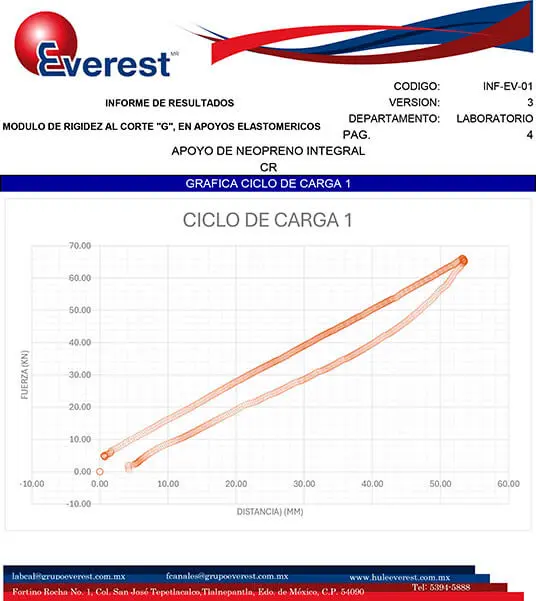
Video: Compression and shear modulus (Modulus G) test in SITC certified press
Technical Data Sheet - Neoprene Bridge Bearings
| PARAMETERS | SPECIFICATIONS |
|---|---|
| HARDNESS, SHORE A | 60 +/-5 |
| TENSILE STRENGTH PSI | 17.5 MPa |
| MAXIMUM ELONGATION % | 350% |
| PERMANENT DEFORMATION (22 hrs at 100°C) | 25% MAXIMUM |
| TEAR RESISTANCE | 45.1 N/mm |
| SELF-EXTINGUISHING FLAME | EQUAL OR LESS THAN 5 SECONDS |
| PARAMETERS | SPECIFICATIONS |
|---|---|
| ACCELERATED AGING TEST | 70 hrs at 100°C 17.5 MPa |
| CHANGE IN TENSILE STRENGTH | 15% MAXIMUM |
| CHANGE IN ELONGATION | 40% MAXIMUM |
| MAXIMUM HARDNESS CHANGE AGED SHORE A | 5 POINTS +/- |
| OZONE CHAMBER RESISTANCE | NO CRACKS (100 hrs at 38°C) |
Types of Neoprene Bearings and Seismic Isolators
Specific solutions for bridges, viaducts, buildings and civil works
Steel-Laminated Neoprene Bearings
Elastomeric bearings with steel plates. High load capacity and deformation control. Ideal for highway and railway bridges.
Sliding Bearings (PTFE)
With Teflon surface for large movements and low friction. Perfect for long-span bridges and structures with seismic requirements.
Seismic Isolators
High energy dissipation seismic devices for seismic zones. Protect superstructure during extreme events.

Infrastructure projects with Everest bearings
We have participated in key projects in Mexico supplying SCT certified neoprene bearings. Learn about some of our success stories.
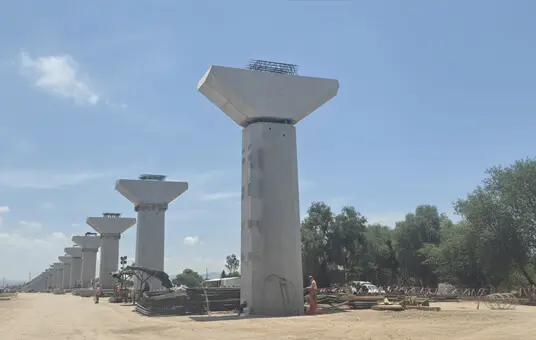
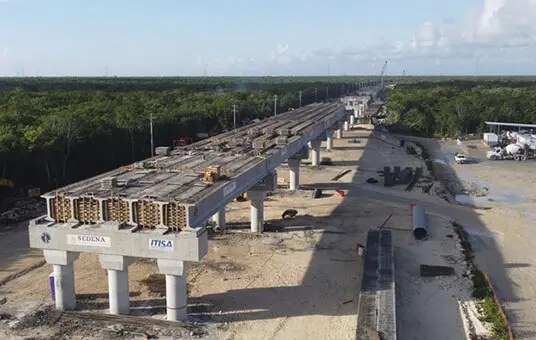
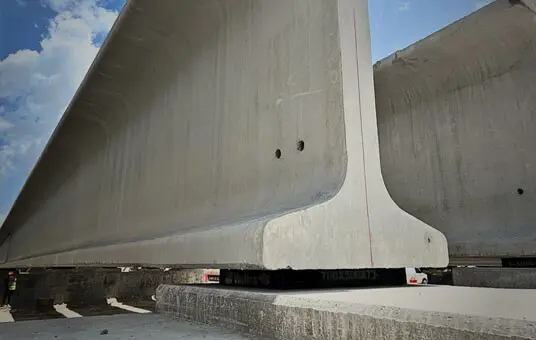

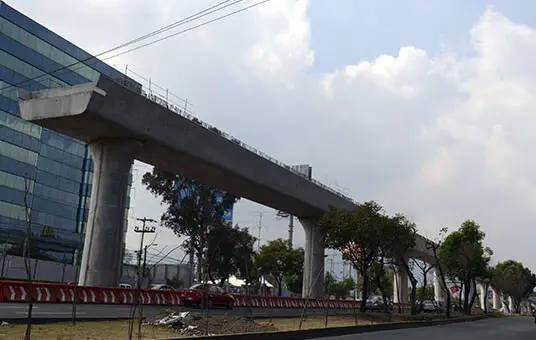
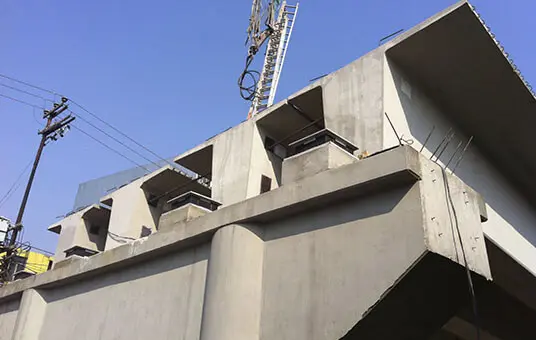







Tren Maya
Location: QR, Yucatán, Campeche, Chiapas, Tabasco
Year: 2022
Bearings supplied: 14,500 units
Bearing type: Steel-laminated neoprene reinforced with steel, fixed and movable bearings, seismic stops.
Everest solution: Bearings with seismic adaptation capacity, ensuring long-term stability.
Civil Engineering Applications
Structures where structural bearings and seismic isolators are essential
Highway Bridges
Bearings for concrete and steel bridges, viaducts and overpasses.
Railway Bridges
Bearing systems for railway bridges and mass transit structures.
Buildings and Structures
Seismic isolation in buildings, hospitals, schools and critical structures.
Industrial Structures
Supports for heavy equipment, gantry cranes and industrial plant structures.
Hydraulic Structures
Gates, dams and structures in contact with water and wet conditions.
Special Works
Tunnels, pedestrian walkways and structures in seismic or high-risk zones.
Advantages of Certified Neoprene Bearings
High Load Capacity
Support from 50 to 1000+ tons, adapting to different structural requirements.
Movement Absorption
Allow thermal, seismic and live load movements, protecting the structure.
Environmental Resistance
Excellent resistance to ozone, weather, salt water and chemical agents.
Long Service Life
Designed to last more than 50 years with minimal maintenance required.
Vibration Damping
Reduce vibrations from traffic, wind and seismic events.
Cost-Effective
Economical solution compared to other structural bearing systems.
Standards and Regulations
Compliance with main international codes and specifications
AASHTO LRFD
Bridge Design Specifications - Section 14: Joints and Bearings
ASTM International
D4014 - Standard Specification for Plain and Steel-Laminated Elastomeric Bearings for Bridges
EN 1337-3
Structural bearings - Part 3: Elastomeric bearings
ISO 22762
Elastomeric seismic-protection isolators
AS 5100.4
Bridge design - Bearings and deck joints
Local Standards
Technical specifications of each country and region
Design Considerations for Structural Bearings
Critical Design Aspects
The design of neoprene bridge bearings requires considering vertical load, horizontal movements, rotations, environmental conditions and specific seismic requirements of the project.
Design Parameters
- Maximum and minimum vertical load
- Expected horizontal movements
- Rotations in all axes
- Operating temperatures
- Site seismic conditions
Recommendations
- Complete structural analysis
- Load capacity verification
- Fatigue and creep consideration
- Periodic inspection and maintenance
- Installation documentation
Frequently Asked Questions about Neoprene Bridge Bearings
Do you need neoprene bridge bearings or seismic isolators? We are SCT certified manufacturers and answer the most common questions about types of structural bearings, materials, standards and quotes.
Neoprene bridge bearings (also called elastomeric bearings or structural bearings) are high-density rubber elements placed between the deck and piers of a bridge. Their function is to absorb thermal, seismic and live load movements, as well as distribute loads uniformly. They are essential to ensure the durability and safety of highway bridges, railway bridges, viaducts and buildings.
The main types of structural bearings for bridges are:
- Plain bearings – without reinforcement, for light loads and moderate movements.
- Steel-laminated neoprene bearings – with steel plates. High load capacity (200-1000 tons).
- Sliding bearings (PTFE) – with Teflon surface, for large movements (±100-500 mm).
- Seismic isolators – high energy dissipation for seismic zones.
- Fixed bearing – allows rotation but restricts horizontal movement.
- Movable bearing – allows controlled displacement.
A fixed bearing allows rotations but restricts horizontal movement (ideal for areas where load must be directed). A movable bearing (also called sliding bearing or with PTFE) allows controlled horizontal displacements (±100 to ±500 mm), useful for absorbing thermal expansions and seismic movements.
Our neoprene bridge bearings comply with:
- SCT (N·CMT·2·08/22) – specifications for road infrastructure in Mexico.
- AASHTO LRFD – standard for bridges in North America.
- ASTM D4014 – specification for elastomeric bearings.
- EN 1337-3 and ISO 22762 – international standards.
Additionally, we have ISO 9001:2025 certification and validate each batch with laboratory tests.
Steel-laminated neoprene is an elastomeric bearing with intermediate vulcanized steel plates. This design allows:
- High load capacity – from 200 to 1000+ tons.
- Deformation control – limits vertical displacement.
- Use in highway bridges, railway bridges and viaducts with heavy loads.
Seismic isolators are seismic devices designed to dissipate energy during an earthquake, reducing forces transmitted to the bridge superstructure. Manufactured with high-density neoprene and, in some cases, with lead or PTFE core. Ideal for seismic zones.
The installation process includes:
- Surface verification – the support must be level and clean.
- Bearing positioning – placed without adhesive or with epoxy mortar as per design.
- Guide plate installation (if applicable) to restrict movements.
- Tolerance verification – final leveling before deck assembly.
The calculation of neoprene bridge bearings is based on:
- Maximum and minimum vertical load (from 50 to 1000+ tons).
- Expected horizontal movements (thermal expansion, braking, earthquake).
- Rotations (longitudinal and transverse axes).
- Environmental conditions (temperature, ozone, humidity).
Neoprene bearing price depends on dimensions, thickness, type of reinforcement (laminated or plain), Shore hardness, quantity and required certifications. To get a custom quote for neoprene bearings: Contact us with your project specifications.
At Grupo Everest we are bridge bearing manufacturers with over 60 years of experience. We sell neoprene bridge bearings directly from the factory, without intermediaries, guaranteeing:
- Competitive prices (lower than distributors or importers).
- Quality certificates per batch and complete traceability.
- Shipping throughout Mexico via specialized logistics.
Quote today with your project specifications.
Do you need SCT Certified Neoprene Bearings for your Project?
Specialized engineering and manufacturing of structural bearings, seismic isolators and sliding bearings (PTFE) for bridges and civil works. Technical advice for selection and design. Quote today!